Winter Newsletter 2025/26

Team Reflections, Accomplishments,
and What’s Coming Next

A new year invites us to reflect on where we have been, where we are now, and where we are going as Nations and as partners in wellness. Thunderbird enters 2026 with gratitude for the leaders, Knowledge Keepers, service providers, and community members who continue to guide this work with integrity, cultural strength, and shared Purpose. The teachings that centre relationship, reciprocity, and connection remain at the heart of everything we do.

As we look ahead, we continue to seek opportunities that deepen collaboration and support the evolution of wellness work across our Nations. Strengthening relationships and learning alongside one another remain central to how we move forward together.

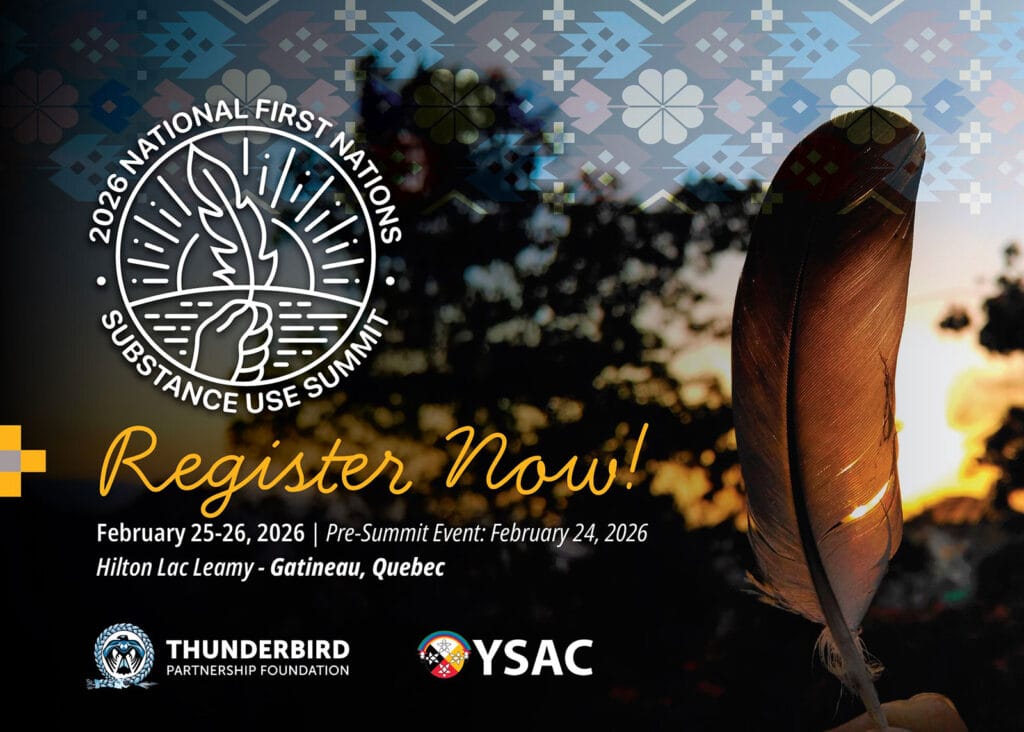
One such opportunity is the 2026 National First Nations Substance Use Summit, a gathering designed to bring people together to consider current realities and explore future directions in mental wellness and substance use supports. It is a dedicated space to reconnect, align our efforts, and look ahead to what is possible when we work collectively.

National Substance Use Summit

February 24 to 26, 2026

Across the country, First Nations communities and organizations are leading powerful and innovative responses to substance use. The 2026 National Summit will bring together practitioners, frontline workers, community members, and leaders to reflect on lessons learned, share promising practices, and strategize on opportunities for advancement.

Together, we will honour the work already underway in communities and strengthen our collective commitment to healing. This event is proudly hosted by Thunderbird Partnership Foundation and the Youth Substance Addiction Committee.

Event Details
Summit: February 25-26, 2026
Pre-Summit Workshop: February 24, 2026 (afternoon only)
Location: Hilton Lac Leamy, Gatineau, Quebec

Hotel details are available on the registration page. Bookings must be made before January 25, 2026, to benefit from our preferred rate. For more information, visit this page.

It’s the 50th anniversary for the National Native Alcohol and Drug Abuse Program and we intend to celebrate!  There will be a banquet at the substance use summit to recognize innovation, people and groups who have made a difference in: award categories with potential for 2 awards per category: (1 for program or service, 1 for individual or group)

1) Harm Reduction

2) Youth focused care (in community or treatment center)

3) Data (use of AMIS or other system to generate client data and how it is used to inform client care, program change and evaluation, etc.)

4) Virtual care

5) Land based

6) Life promotion

7) Certification of workforce – ways employers have supported certification of core competencies in service delivery, client outcomes

8) Innovation – to meet gaps, improve services, address workforce needs

9) Integration of Indigenous Knowledge in workforce initiatives, culture in program and service delivery

10) Care of Special Populations – e.g., incarcerated First Nations, youth aging out of care, chronic health and substance use, people who use drugs & at risk of drug poisoning, unhoused population

11)  Community based prevention

12)  Recovery Champions

Champions are: volunteers, funded programs/paid staff, leaders, groups

Criteria:  By First Nations for First Nations or First Nations Governed Organizations serving First Nations (first nations = person, people, group /or community)

Watch for the link to make your submissions.  All submissions will require a story and a picture.  We will create a 50-year anniversary book with these and share the publication broadly.

National Mental Wellness Workforce Association

The National Mental Wellness Workforce Association  is a collaboration between Thunderbird and First Peoples Wellness Circle that promotes core competencies drawn from the First Nations Mental Wellness Continuum.

The goal is to develop a workforce association that is supported by a core competency framework. It will be structured around key knowledge, skills, and behaviors for the workforce supporting mental wellness for First Nations.  

Building on work completed on the core competencies, Thunderbird and First Peoples Wellness Circle have engaged an external contractor to help develop a framework that refines the core competencies, and establishes certification standards, scope of practice, and key elements for governance. The expected completion date for this work is March 31, 2026.

Literature Reviews on Psychosis

Understanding drug induced and trauma induced psychosis is important to several Thunderbird projects. To that end, Lakehead University Psychology PhD candidates, Lydia Hicks and Genevieve Berube, working with Dr. Chris Mushquash, have been engaged in literature reviews focussed on early, drug induced, and trauma induced psychosis.

Drafts of the reviews are complete and being readied for future publication.

In addition, the primary authors are submitting abstracts to present their research results at two upcoming conferences.

This vital work will influence Thunderbird projects such as the HOS Update, Model of Care for Complex Trauma, the First Nations Mental Wellness Workforce Association, and the Standardized Treatment Curriculum project.

Ways of the Heart Youth Council Update

The Ways of the Heart Youth Council (WHYC) is on track with its priorities and continues to build strong foundation pieces for youth-led, culturally grounded programming.  Key projects are being advanced with significant progress across its pods and committees.

Two significant projects underway are the Reconnection for Displaced Youth and Two-Spirit Resources.  These projects are both moving through development stages, with sharing circles, application drafting, and Research Ethics Board (REB) preparation underway.

Youth have committed to mentorship in Governance through joining the Board of Directors  for Thunderbird Partnership Foundation and First Peoples Wellness Circle.  Other leadership opportunities taken on by the youth include participation in the Global Leadership Exchange and preparations for co-hosting Healing Our Spirit Worldwide (HOSW).

The Communications priorities and activities are focused on expanding engagement strategies, exploring a Ways of the Heart youth-focused social media account, and supporting research collaborations such as ACCESS Open Minds.

Additional activities include WHYC recruitment efforts, Terms of Reference review, and representation at Assembly of First Nations Mental Wellness Committee meeting.

Workplan projects continues to move forward. The Land-Based Indigenous Learning project is nearing completion of translation. The Two-Spirit Youth Wellness Toolkit, peer-to-peer webinar series, and displaced youth developmental supports are all in active stages of planning and content building.

The WHYC also applied for a $20,000 Indigenous Youth Roots grant to deliver a youth food sovereignty camp on Manitoulin Island.

Looking ahead, the Ways of the Heart Youth Council is preparing for its second in-person meeting, with potential host locations including Winnipeg, Vancouver Island, or the Yukon. Recruitment efforts will be strengthened through new promotion and communication strategies, while working groups continue advancing along with communications planning, and partnerships with national organizations. WHYC remains on track with its priorities and continues to build strong foundational pieces for youth-led, culturally grounded programming.

Defining Complex Trauma

Western definitions of complex trauma often fail to reflect the lived realities of First Nations, overlooking the relational, spiritual, and collective dimensions that shape these experiences. To address this gap, Thunderbird developed a definition grounded in First Nations worldviews as the foundation for a larger project to create a model of care for First Nations experiencing complex trauma. This definition was informed by a comprehensive literature review, engagement at conferences and gatherings, and guidance from working groups that included knowledge keepers, language speakers, Elders, and Indigenous scholars.

Indigenous worldviews describe complex trauma as an intergenerational layering of traumatic experiences that affect the whole person spiritually, emotionally, physically, and mentally. These effects are often present within families, communities, and affect relationships with culture and land. Complex trauma for First Nations is cumulative, collective, and ongoing. It is rooted in colonialism and perpetuated today through systemic racism and inequities in housing, education, healthcare, food security, and criminalization. This can lead individuals and communities to internalize shame and self-blame.

First Nations languages do not have words for ‘complex trauma’ but they do have concepts that convey a belief that pain and suffering are temporary.  This belief is reinforced through First Nations languages, relationships with family, community and land and through culture-based practices and ceremonies.  In this rich environment, pain and suffering cannot dominate because these elements all support vision towards living life and the core responsibility of making good tracks on the earth for the future to follow.  This belief does not ignore or diminish complex trauma, instead this world view attends to complex trauma as needed. So as First Nations strengthen these elements of their identity, the belief that pain and suffering are temporary and healing is possible supports wellness over time. Life is strengthened through

  • family,
  • Community,
  • land you come from,
  • language and identity,
  • culture,
  • ceremony, and
  • kinship,


where strength, knowledge, and the capacity to heal are carried and restored.

Knowledge Tools

Thunderbird is proud to share new knowledge tools designed to support First Nations communities in responding to the substance use crisis, with a strong focus on harm reduction and healing. Our newest additions include two important knowledge tools:

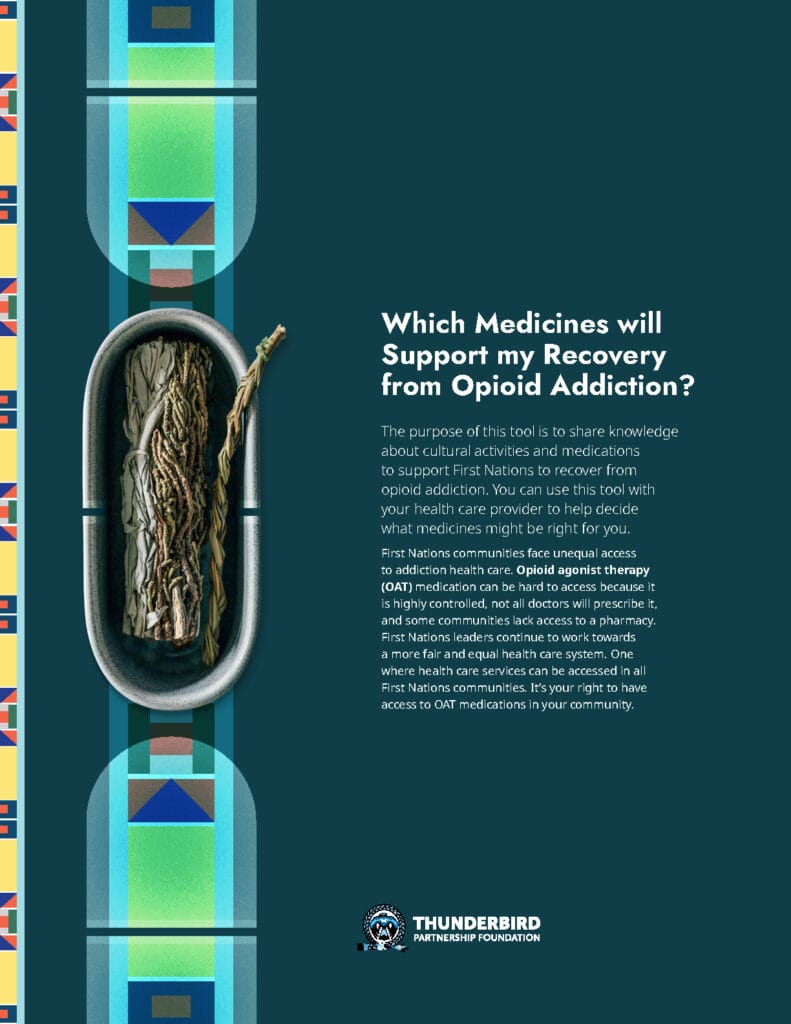
  • Which Medicines will Support my Recovery from Opioid Addiction?
    This OAT (Opioid Agonist Therapy) decision-making tool adapts clinical guidance from META: PHI’s OAT tool and integrates it with the First Nations Mental Wellness Continuum Framework. It helps individuals, families, and care providers explore medicine options that align with both clinical best practices and First Nations culture and Indigenous Knowledge on wellness.
  • Stand Up to Stigma: Stand Up for Peace
    This knowledge tool focuses on understanding and addressing stigma, a key barrier to wellness, and promotes peace-making as a pathway to reduce stigma.


Both new knowledge tools are now available in Thunderbird’s Harm Reduction Resource Kit.

Several more knowledge tools are also in development, including Supporting Recovery from Methamphetamine Use: A First Nations Culture-based Tool. This upcoming resource will share knowledge about the effects of methamphetamine use and discuss culture-based approaches to support wellness.

Together, these knowledge tools bring to life Thunderbird’s commitment to moving knowledge into action by translating culture-based evidence and community wisdom into meaningful practical resources that support wellness for First Nations communities.

New Training Program

Thunderbird is developing a new training program to support existing and new cultural and emotional support workforce. This includes Elders/Traditional Healers who work within the network across Canada to support class members and potential class members of the Settlement Agreement, including affected family and community members.  

This training program will offer a series of courses that will be developed from Culture as the Foundation, and core competencies for serving children, youth, and families.  This is an exciting journey and will invite First Nations experts to join a working group that will guide Thunderbird in the development of course content and resources.

New Pharmacology Train-the Trainer Program

Thunderbird’s Training and Education team introduced a new Train the Trainer program in December 2025. This new five-day program is designed to prepare trainers to effectively deliver a three-day Pharmacology curriculum to stakeholders, primarily those who are the First Nations workforce providing services in substance use treatment and harm reduction programs. The goal of this program is to equip trainers with an understanding of drug pharmacology and the impacts of substance use, along with knowledge sharing practice to support facilitation skills development. The training focuses on the specific substance groups of Opioids, Stimulants, Depressants, and Cannabis.

This new Pharmacology training content emphasizes the essential role of cultural and harm reduction approaches to support healing and wellness within Indigenous communities.

Thunderbird’s Train-the-Trainer Pharmacology Program will help to expand the team of certified trainers. This, in turn, will support the establishment of a national network that enhances First Nations regional and community capacity through certified training and knowledge transfer for the workforce.

Buffalo Riders National Training 2025-2026

Thunderbird is well on its way to fulfilling the goal of certifying 150 facilitators for the Buffalo Riders Youth Early Intervention training for First Nations Youth, having already certified 91 facilitators as of November 2025. Funding for this initiative was provided for the 2025/26 fiscal year by ISC Mental Wellness Division and Health Canada SUAP.

Buffalo Riders facilitator training is developed from an Indigenous wisdom perspective, which is both culturally centred and strength based. The program curriculum targets First Nations youth between the ages of 11 and 13, indicated as at-risk for problematic substance use.

The 5-day virtual facilitator training is meant for

  1. persons working within First Nations schools,
  2. community programs, or
  3. Indigenous organizations offering youth programming.


The training program also provides all resources required for full program delivery including all materials to deliver a 10-session early intervention program for First Nations Youth ages 11-13. The program is also adaptable to the learning needs and cultural relevance of each Nation.

Thunderbird’s training team co-facilitates the virtual delivery of Buffalo Riders with two remarkable regional trainers: Deb Ludeman and Cheryce Oonook-Pilling.

  • Deb is the Prevention Services Manager for Musk-kosiminiziibing (Big Grassy River First Nation) Treaty #3 territory, serves on Band Council, and is the board chair for Giishkaandago’ikwe Health Services. According to Deb, “…being a Regional Trainer with Thunderbird Partnership Foundation adds to my life and [ I ] encourage others to explore the opportunity, they won’t be disappointed!
  • Cheryce lives in Thomson, Manitoba and has facilitated Buffalo Riders for youth in person throughout the province several times. Cheryce brings valuable experience from having worked directly with youth to the facilitator training deliveries with Thunderbird.


Winter 2026 Dates for Buffalo Riders Virtual Training Delivery:

  • January 26 – 30
  • March 2 – 6
  • March 9 -13


See more information on training opportunities at https://thunderbirdpf.org/training-calendar/

Training Calendars

The 2025-2026  training calendar is available on our website or in our Community of Practice hub. The training calendar includes

  • a link to a video that shows how to use the calendar,
  • training course posters with course descriptions,
  • virtual training delivery dates,
  • registration details for each course, and
  • a training trailer with course description, learning objectives and learning outcomes.


Training Calendar Information

2025-2026 National Training Calendar: https://thunderbirdpf.org/training-calendar

2026-2027 National Training Calendar: To be released in January 2026

New Methamphetamine Self-Directed Online Course to Launch in 2026

January 2026 will see the release of a new self-directed online course from Thunderbird about methamphetamine use, more commonly referred to as meth.

This new course is ideal for service providers to learn

  • how meth affects the brain and body,
  • its harmful health effects including community impacts, and
  • ways to reduce harm through appropriate interventions.


This online course is developed to enhance service providers’ knowledge toolkit in providing compassionate, culturally informed support for Indigenous persons living with substance use.

Thunderbird’s online self-directed courses are available for NNADAP/ NYSAP treatment centre employees and the First Nation community wellness / mental wellness workforce. For information on course registration please visit  https://thunderbirdpf.org.

New Digital Dialogue Tools

Thunderbird ‘s Training and Education team has digitized ten dialogue tools from the Let’s Talk Cannabis (LTC) curriculum. This has transformed them into engaging, tangible, culturally informed resources designed to facilitate conversations with youth.

We recently shared these tools at a workshop during the CCSA IOS 2025 conference. Participants were introduced to the tools and then asked to use them as inspiration to develop a relevant tool for their own work and community, culminating in the completion of a design brief and prototype.

The final versions of these digitized tools will be shared on Thunderbird’s Community of Practice (CoP).

  1. Community Feast and Dialogue: This tool includes strengths-based conversation starters designed to encourage meaningful conversations during community gatherings or ceremonial feasts, supporting wellness through shared food and ideas.
  1. Talking Circles: Designed to support the facilitation and participation in Talking Circles (both virtually and in-person). This tool provides checklists and a fillable template for following local protocols and exploring a given topic with respect.
  1. Medicine Walk: This tool consists of a series of videos focused on the four Sacred Medicines (Tobacco, Cedar, Sage, and Sweetgrass). It features a gamification element to help viewers identify the Sacred Medicines.
  1. Photovoice: Outlining a community-based participatory research method, this tool uses photography to help youth reflect on their personal and community strengths. It also provides suggested prompts for cannabis dialogue and collective healing.
  1. Silent Dialogues: This tool provides sample discussion prompts for cannabis and wholistic wellness, along with a sample script for facilitating a silent dialogue. This ensures all participants—especially those less likely to speak up—can contribute.
  1. Body Mapping: This resource outlines the process for conducting an in-person body mapping activity, which uses art and images to investigate challenging questions, and includes prompts for group reflection.
  1. Community Arts: Designed to encourage reflection on community arts, this tool offers individuals the opportunity to share personal stories and experiences with art. It also includes a section for users to create their own artist spotlight.
  1. Collaborative Drawing: This tool supports engaging conversations within groups of any size through various drawing prompt examples, including one that utilizes the four quadrants of Thunderbird’s Indigenous Wellness Framework.
  1. Community Gatherings: This resource supports the organization of thoughtful and respectful Community Gatherings (such as town halls). It includes guidance on Cultural Protocols and interactive QR codes that provide access to additional learning materials.
  1. Masquerade Ball (Conversation Cafes): This tool outlines an activity designed to facilitate dialogue and explore thoughts and concerns in a safe space using masks. It includes a guide for creating the masks and specific guidelines for the accompanying masquerade ball activity.

Thunderbird Wellness App

A New Chapter in Our Wellness Journey

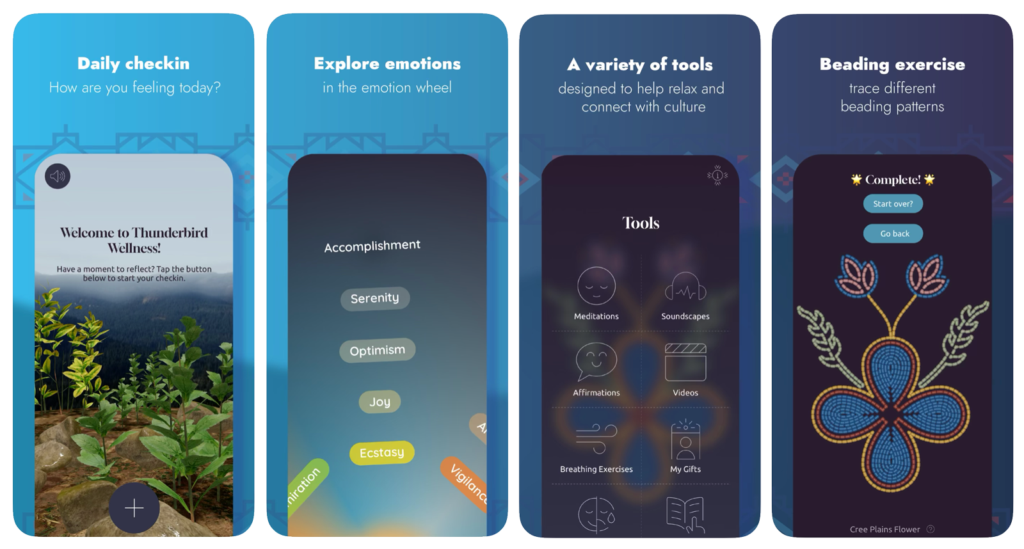
Thunderbird is honoured to share that the newly revamped Thunderbird Wellness App has officially launched and is now available on both the IOS App Store and Google Play. Over the past year, our team, internal partners, and external testers have walked alongside us to shape this new app version—offering insights, identifying bugs, and helping us refine the experience so it better reflects the needs, strengths, and voices of First Nations communities.

Guided by teachings that remind us wellness is rooted in balance, Belonging, and connection, the updated app introduces enhancements that reflect both cultural knowledge and evidence-informed practice. The Wheel of Emotions has been revised using the Plutchik model, a widely recognized framework in psychology that illustrates how emotions relate to and influence one another. By grounding this tool in proven theory—and expanding it to show related and opposite emotions—the app supports users in building emotional vocabulary, creating Meaning from their experiences, and fostering a sense of Hope by showing that emotions can shift, evolve, and be understood with greater clarity.

This new version also introduces a Beading Exercise, offering a calming, culture-based activity that can help interrupt moments of emotional overwhelm. By tracing beadwork patterns and choosing colours, users can pause, refocus, and reconnect with a sense of purpose through a familiar and creative practice.

With these updates, and many other behind-the-scenes improvements, the Thunderbird Wellness App continues to grow as a resource grounded in culture, community, and wellness. We extend our gratitude to everyone who shared feedback throughout development—your guidance helped shape a tool that reflects the values, strengths, and stories of our communities.

Mino Bimaadiziwin Podcast

A New Look for the New Year

Thunderbird is pleased to share that the Mino Bimaadiziwin Podcast will introduce a refreshed visual identity in the new year. This updated look reflects the evolving direction of the series while staying true to its heart: culturally grounded conversations guided by relationship, story, and collective wellness.

While the podcast has long served health professionals and those working in the wellness field, Thunderbird is placing renewed emphasis on supporting listeners in strengthening connections with youth and fostering understanding across generations. The topics explored in each episode offer tools, teachings, and perspectives that can help bridge communication styles, build trust, and create more culturally grounded pathways to wellness for young people, families, and communities.

Throughout 2025, the podcast explored themes related to trauma recovery, cultural identity, decolonized leadership, youth advocacy, and wholistic approaches to addictions and mental health. Dr. Hopkins was joined by several thoughtful guests this year, including Shontelle Prokipcak, Theresa Crow Spreading His Wings, Koral Hamilton, and Dr. Peter Butt, each offering insight rooted in lived experience, community, and cultural knowledge.

As we move into another year of storytelling, Thunderbird looks forward to continuing conversations that honour culture, deepen understanding, and support wellness across generations. If you—or someone you know—may be interested in joining Dr. Hopkins for a future episode, we invite you to reach out at communications@stg-designandtesting-staging.kinsta.cloud.

We are grateful to walk alongside our listeners and communities, carrying these stories forward together.

Building Regional Connection

The Regional Mental Wellness Coordinators look towards the potential in a fresh new year, while also recognizing the progress made in 2025, guided by our spirit-led principles at Thunderbird.


Building Regional Capacity

Over the past year the team welcomed new coordinators, and together with First Peoples Wellness Circle, worked to support the implementation of the First Nations Mental Wellness Continuum (FNMWC) framework and enhance partnerships at all levels.


Connection with Commitment

Regional Mental Wellness Coordinators work to nurture relationships with established networks and find opportunities to connect with First Nations stakeholders across regions. The team regularly engages in conversations about mental wellness and substance use through regional meetings with treatment centres, First Nations leadership and organizations, and provincial and federal partners. Through presentations and regional engagement, we gather feedback that directly informs approaches to supporting First Nations in responding to mental wellness and substance use challenges.


Our 2025 Focus

A major focus this past year was on developing the National Mental Wellness Workforce Association and advancing regional priorities through the Maamawi Kanaakiimi – a collaborative initiative rooted in culturally grounded, community-driven approaches to mental wellness.

Some other highlights of our collaborative work in 2025 :

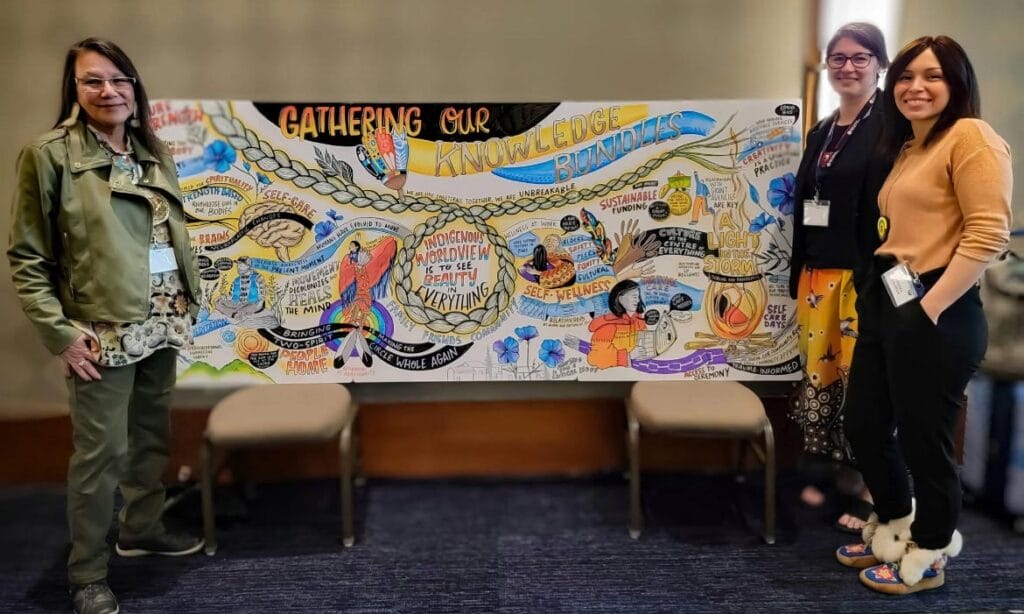
  • Attended the Gathering our Bundle Touchstone event, provided feedback and regional input to inform the development of new resources
  • Facilitated engagement sessions on Honouring Our Strengths 2nd Edition, Model of Care for Substance Use and Complex Trauma
  • Participated as members of the First Nations Mental Wellness Continuum Implementation Team


Developing a Model of Care for Substance Use

Regional Mental Wellness Coordinators have put their hearts together in the development of the Model of Care for Substance Use. This is a community-centred model of care that advocates for substance use services to be made available in the community to truly support First Nations. The model is rooted in culture and spirit-centred principles, and supports the whole person, while being inclusive of individuals, families, and communities.

At its core, this model affirms that First Nations hold the inherent right to access care and support close to home. Developing a culturally grounded, community-based model of care is about restoring balance, building strong working relationships, and ensuring access to care that is meaningful, respectful, and self-determined. Along with the development of the Model of Care for Substance Use, the team is conducting regional mapping of essential services to help inform regional implementation of the model.

Winter Wishes

Thunderbird’s Regional Mental Wellness Coordinators encourage their relatives across Turtle Island to continue to draw on the gifts that have been given that ground us and strengthen our resilience through this season of rest and recovery for the earth. As you move through this winter season, carry forward the warmth of visiting, feasting, singing, dancing, and laughing together, and sharing the stories that come alive when we gather together.

AMIS Expansion

The Addictions Management Information System (AMIS) was created just over a decade ago by Health Canada and the AMIS Working Group. AMIS data helps inform client care, highlight Indigenous needs, shows the strengths of NNADAP/NYSAP, and supports research plans over time. This unique data base system continues to evolve and expand to support First Nation treatment centres across Turtle Island.


Growth

As of November 2025, there are 48 Indigenous treatment centres, and 16 First Nation governed community organizations actively using AMIS. This brings the total to 64 participating groups, which translates to 697 total current users of the system.


Accreditation

Most (79% or 38/48) of the current First Nations treatment centres who are using AMIS are accredited centres. Through the features of AMIS, Thunderbird continues to support accreditation efforts of centres. 


Training

Training is key to maximizing the effective use and benefits of AMIS. Thunderbird provides training to AMIS users through 

  • robust onboarding practices,
  • ongoing virtual one to one and group support, and
  • two in-person trainings per year.


Training satisfaction is consistently ranked high. For example, those who attended Thunderbird’s most recent in-person AMIS training rated the training an overall average of 9.2 out of 10. Providing this type of feedback is helpful as it allows Thunderbird to adjust and enhance future trainings, and the system itself! Monthly group meetings with AMIS user groups are also highly valued by Thunderbird as opportunities to collect feedback for analysis and ongoing improvements.


Contact

Treatment centres interested in onboarding training are encouraged to reach out to Thunderbird through the AMIS system. For information on the process, please contact the support team at amis@stg-designandtesting-staging.kinsta.cloud.

Positive Growth in Virtual Support for First Nation Communities

On March 27, 2025, Thunderbird launched the BIRCH program – a self-guided substance use recovery program facilitated by First Nations mental wellness workforce. A key access point to the program is the website: birchbundle.ca.

Through its website, the BIRCH (bundle of interventions, resources, and cultural hub) program provides access to culturally based, virtual mental wellness and addictions resources including

  • template curriculum content (Program Modules) for application and adaptation within treatment centre and mental wellness programming (virtual or in-person),
  • facilitation guides and resources, and
  • an internal resource hub for First Nations mental wellness workers.


Since launching the program, birchbundle.ca has welcomed 2,409 unique visitors to the site.  Visitor feedback to date has been positive noting appreciation for free access to programming content and for the flexibility to modify content for custom needs.

To better ensure program accessibility, Thunderbird recently completed an accessibility review to ensure the website works properly with assistive technologies such as screen readers. All resources are also being translated to French and will be available early in 2026.

The BIRCH program and birchbundle.ca will continue to evolve with ongoing content revisions and development, and program analysis through pilot evaluations that are currently underway until March 2026. Thunderbird is also developing tools and guidelines to protect Indigenous Knowledge in a virtual care environment.

All BIRCH resources are free to Indigenous and First Nations addictions treatment or mental wellness organizations across Canada. For more information Thunderbird invites you to visit birchbundle.ca or email birch@stg-designandtesting-staging.kinsta.cloud.

Internal Operations – News and Updates

Conferences and Events Attended in 2025

MonthConferenceTradeshow
AprilRekindling the Fire – Ontario Mental Wellness Team GatheringYes
Breaking Bannock and Barriers GatheringYes
AugustChiefs of Ontario – First Nations Community Wellness ConferenceYes
SeptemberAssembly of First Nations Annual General AssemblyYes
OctoberAnishinabek Nation Prevention Conference – Raising Up Our Children Our WayYes
National Native Drug and Alcohol Abuse Program Gathering, ManitobaYes
National Native Drug and Alcohol Abuse Program Gathering, OntarioYes
NovemberFirst Nations Health Managers Association Annual ConferenceYes
Canadian Centre on Substance Use and Addiction National Conference – Issues of SubstanceYes
Assembly of First Nations Mental Wellness Committee MeetingYes
Indigenous Services Canada Joint GatheringYes
16th Annual Wellness Fair: From Harm Reduction to HealingResources Shipped

Staff Retreat 2025

Thunderbird staff came together for an annual retreat from April 29 to May 1, 2025, on the land of Eelūnaapèewi Lahkèewiit (Delaware Nation at Moraviantown) in southwestern Ontario. Staff joined in person and via Zoom to take part in team-building activities, professional development, and social time.

Presentations included Thunderbird’s new Ways Of Being And Doing (formally Code of Conduct), Emotional Intelligence (towards enhanced relationships, and improved wellbeing), and Change Management (to support staff with positive engagement around organizational change). Staff also reviewed their own personal conflict management styles and explored key conflict management modes through information and activities.

The sun set on the final retreat day with a ceremony hosted by the Delaware Nation, and staff later feasted the Thunderbird.


Naloxone Distribution

Thunderbird continues to distribute naloxone kits to First Nation communities and treatment centres in partnership with Emergent. This year, since April 2025, Thunderbird provided 15,000 naloxone kits to First Nations who could not otherwise access the kits through their province. An additional 730 kits were sent to treatment centres who provide services to First Nation communities.  Requests for naloxone kits come in to Thunderbird through web orders at this link.


Annual OVS Survey

Each year Thunderbird collects feedback from staff through the Organizational Vital Signs (OVS) survey as a way to monitor and assess its own wellbeing. The OVS has been administered most years since 2013, most recently in the fall of 2025. This assessment tool provides employees a way to offer anonymous feedback. Results are currently being analyzed from the recent survey and once completed the feedback will assist in guiding Thunderbird’s next steps.

Another method of feedback is through active employee involvement in various committees including the

  • Policy Committee,
  • Joint Health and Safety Committee, and
  • the Social Committee.


Members from every Thunderbird team are invited to be a part of these committees ensuring representation for everyone.

Looking Back to Move Forward

Organizational Evaluation

Thunderbird Partnership Foundation’s 2024-2025 fiscal year marked the beginning of a new 10-year plan, which was timely to conduct a full organizational evaluation that included 

  1. an external review of stakeholders through surveys and interviews, and
  2. an internal assessment through the Organizational Vital Signs survey and a summary of tasks/ deliverables for each of the 2019-2024 strategic priorities.

Thunderbird’s goal remains the same – moving towards establishing the organization as a Centre of Excellence in the use of Indigenous Knowledge and Culture for mental wellness.


Engaging and Assessing

The 2024-2034 strategic plan continues the journey of previous priorities by further defining the organization’s path as a leading, culturally centred voice advocating for collaborative, integrated and wholistic approaches to healing and wellness.

To assess the last fiscal year, 2024 – 2025, the organizational evaluation also looked back on previous years whose priorities influenced this first year of Thunderbird’s new ten-year plan. External partners and stakeholders were engaged in recent months through surveys and interviews, while Thunderbird staff were engaged through the Organizational Vital Signs survey and other internal assessments. 

Overall stakeholder satisfaction was expressed for Thunderbird’s contributions to its 2019-2024 priorities, which included

  • harm reduction,
  • life promotion,
  • virtual care and services environment,
  • early activity in increasing regional capacity across First Nations; and
  • increasing data quality, quantity, and accessibility.


Limited reflections were provided for developing a National Mental Wellness Workforce Association; however, all feedback was supportive of the project moving forward.

Overall, assessments from both stakeholders and staff suggested that Thunderbird is providing effective services and, moving forward, will benefit from

  • coordinated internal processes,
  • improved cross-team communication, and
  • ongoing internal assessment.


All of this will support Thunderbird’s progress towards being a trauma informed organization.


Strategic Direction

Part of Thunderbird’s 2024-2034 Strategic Direction focuses on the following priorities from this current fiscal year:

  • Increase Regional Capacity Across First Nations
  • Increase Data Quality, Quantity, and Accessibility
  • Establish a National Mental Wellness Workforce Association


Two more priorities that will be addressed later in 2024-2034 include:

  • Building Foundations for an Indigenous Accreditation Body (This was not asked to stakeholders however reflected as a priority for moving forward.)
  • Public Policy and Corporate Affairs


Eyes Forward

Next steps for Thunderbird include fully analyzing the outcomes from 2019 to 2024, developing indicators for 2024-2034 strategic priorities, creating action plans for improvement and priorities, and analyzing data limitations for improved future planning.

Head Office
22361 Austin Line
Bothwell, ON
N0P 1C0

© 2024, Thunderbird Partnership Foundation (National Native Addictions Partnership Foundation Inc.)